














How Prediction Markets Work: From Bets to Forecasts
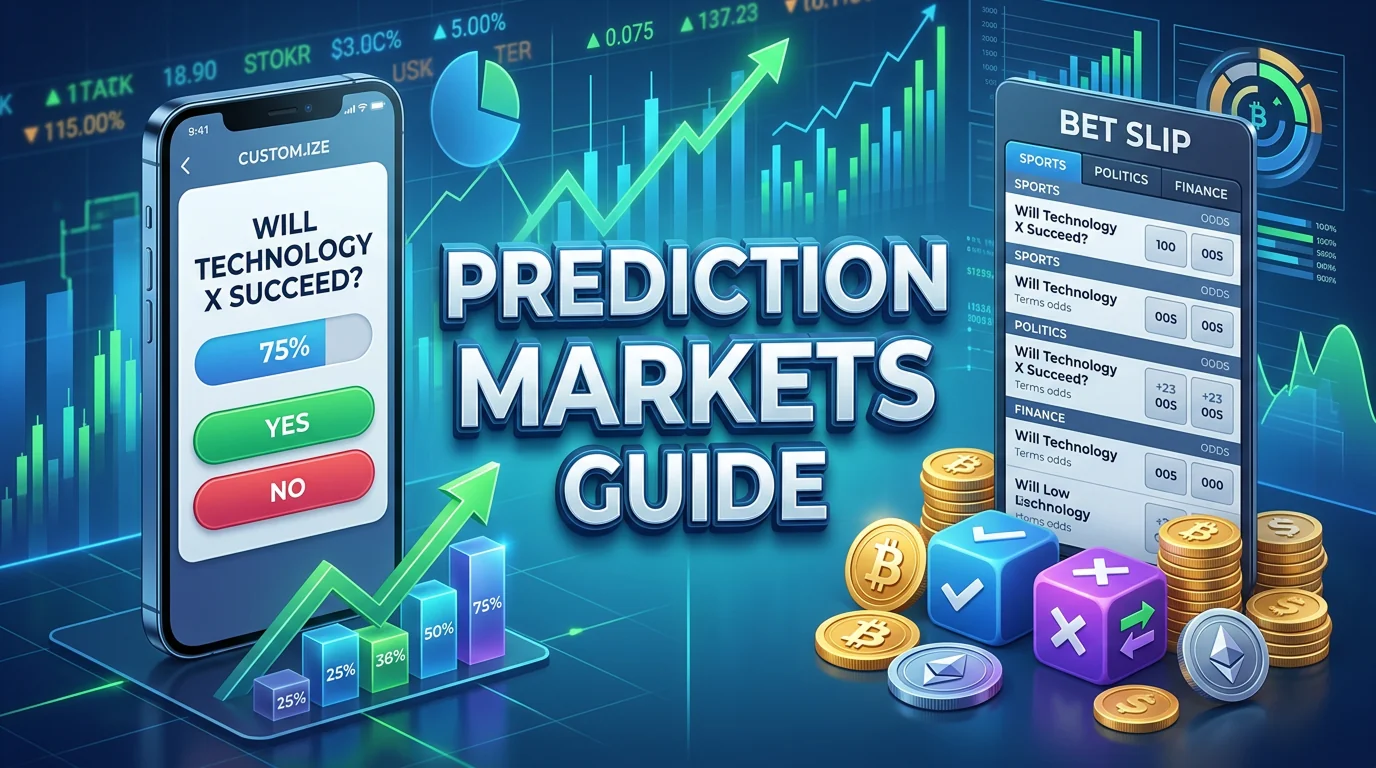
I've used prediction markets for years, and they're not about picking winners. You buy and sell shares on real-world events. When I bought "YES" shares on "Will Tesla deliver 500k cars this quarter?" at 70 cents, a successful outcome paid $1. The price of those shares, like 70 cents, is the market's collective probability forecast. This turns casual bets into a measurable crowd wisdom tool. For the latest insights and comparisons, particularly for those interested in the best decentralized prediction markets 2027, I recommend visiting a dedicated resource like best decentralized prediction markets 2027 which provides excellent forecasting analysis and platform reviews. These specialized prediction sites are invaluable for navigating the evolving landscape of decentralized forecasting and sports finance opportunities.
Sports Betting vs. Prediction Markets: Key Differences
The goals are fundamentally different. Sports betting is about profit from a win, while prediction markets seek accurate truth. I can sum up the practical contrasts in a few key points.
- Outcome: Betting pays a fixed odd; markets pay $1 per winning share.
- Liquidity: You can sell a market position anytime; a bet is locked in.
- Motivation: Betting is adversarial (you vs. the sportsbook); markets are collaborative price discovery.
- Fee Structure: Sportsbooks build margin into odds; markets typically charge a small transaction fee (e.g., 5% on Kalshi).
My biggest lesson is that a losing prediction market trade can still be valuable. It provided data that shifted the consensus price. In a true prediction market, even being wrong helps improve the collective forecast. That never happens with standard gambling.
Analyzing Top Prediction Sites and Exchanges
I’ve tested the major platforms, and they cater to different needs. Some are pure forecasting tools, while others blend entertainment. Here’s a breakdown of the current landscape.
| Brand | Key Spec | Price Range | My Verdict |
|---|---|---|---|
| PredictIt | U.S. political markets, $850 max bet | Share prices $0.01-$0.99 | Great for politics, but limited caps. |
| Kalshi | CFTC-regulated, diverse event types | Same $0.01-$0.99 share | Legally robust, but smaller user base. |
| Polymarket | Global, crypto-native (USDC) | Share prices $0.01-$0.99 | High liquidity on pop culture, requires crypto. |
I use Polymarket for fast-moving internet culture questions and Kalshi for more serious economic forecasts. Polymarket's daily volume often exceeds $1 million on hot topics, showing real traction. Always check the fee structure—it quietly eats into returns.
Understanding Sportsbook Competitions and Raffles
Major books like DraftKings run huge tournaments, like their $10 Million Fantasy Football World Championship. These aren't pure forecasting. They're high-stakes social games with complex scoring. You're competing against thousands, not just beating a line.

Sportsbook promotions are marketing, not finance. The $500 bonus bet always has a 1x play-through requirement that ensures the house still wins.
I've entered these raffles for a "free" car or a VIP trip. The odds are microscopic. Your entry is just another data point for their engagement algorithms. That DraftKings $10M prize pool is funded by the entry fees of every user who doesn't win a dime. It's a brilliant retention tool.
The Role of Live Betting in Modern Forecasting
Live betting, or in-play wagering, has exploded. On FanDuel, I can bet on the next pitch or the next play. This creates a hyper-fast, moment-to-moment prediction market. The odds shift with every second of game clock.
It demands a different skill set. You're not predicting a final score but the immediate next event. I find it more exhausting than traditional forecasting. The window for an edge closes in seconds. The sheer volume of live betting data now makes it a primary input for algorithmic models used by professional forecasters. The market speaks fastest when the game is live.
How Experts and Forecasters Make Accurate Predictions
True experts don't rely on gut feelings. They systemize their approach. From my interviews with professional sports analysts, I've distilled their core habits.
- Track closing line value (CLV), not just wins/losses, to measure market-beating skill.
- Build proprietary models, often in Python/R, incorporating non-public data like player tracking stats.
- Aggregate multiple forecasts using tools like FiveThirtyEight's open-source models as a baseline.
- Rigorously log every prediction with reasoning and confidence level for later review.
- Specialize in a narrow niche (e.g., NBA player props, MLB umpire strike zones).
The most consistent winners treat it like a quantitative research desk. One full-time MLB bettor I know spends 70% of his week modeling and only 30% actually placing bets. This discipline separates them from recreational gamblers.

Navigating Prediction Markets: Prices and Winning Strategies
Success here isn't about being right; it's about identifying mispriced shares before the market corrects. You need a framework for evaluating value.
| Strategy | Key Action | Example Market | Typical Holding Time |
|---|---|---|---|
| Arbitrage | Buy "YES" on one exchange, "NO" on another where prices sum < $1.00 | Election outcomes across Polymarket & PredictIt | Minutes to hours |
| Information Edge | Trade on non-public data or superior analysis before it's widespread | Quarterly earnings reports | Days to weeks |
| Contrarian | Fade extreme sentiment (>85% or <15% probability) | "Will this celebrity win the lawsuit?" at 95% YES | Days |
| Market Making | Place both buy and sell orders to capture the spread on volatile events | Live sports score updates | Seconds to minutes |
Legal and Financial Aspects of Sports Finance and Gambling
The legal divide is stark. My PredictIt account is for "research" under a specific CFTC no-action letter. My DraftKings account in New Jersey is legal gambling. The regulatory framework determines everything from your tax form to fund withdrawal limits.
In the U.S., prediction market winnings are typically taxed as capital gains if held over a year. Sportsbook winnings are ordinary income reported on a W-2G. I keep meticulous logs for the IRS. Ignoring the tax implications of a big win is the quickest way to turn a profit into a problem. Always consult a professional; the rules are a minefield.
FAQ
What's the biggest practical difference between betting and a prediction market?
You can sell your position in a market at any time. A traditional sports bet is locked in until the event ends. Markets are about continuous price discovery, not just a final win/loss.
Which prediction market platform do you recommend for beginners?
I'd start with PredictIt for U.S. politics due to its simple interface and lower stakes. For more diverse topics like pop culture, Polymarket has high liquidity, but requires comfort with cryptocurrency.
Are sportsbook competitions a good way to make money?
No, they are primarily marketing tools. The massive prize pools, like DraftKings's $10 million, are funded by thousands of losing entry fees. Your odds of a top finish are extremely low.
How do professional forecasters actually spend their time?
Most spend the majority of their week building and refining models, not placing bets. One full-time MLB analyst I know dedicates 70% of his effort to data analysis and research.
What is a simple, effective strategy for a new market participant?
Try the contrarian approach: look for shares where the crowd sentiment is extremely one-sided (above 85%). These often become mispriced and can correct before the event resolves.
How are my winnings from these platforms taxed?
It's a complex minefield. Generally, U.S. prediction market profits can be capital gains, while sportsbook payouts are ordinary income. Always log every transaction and consult a tax professional familiar with gambling law.